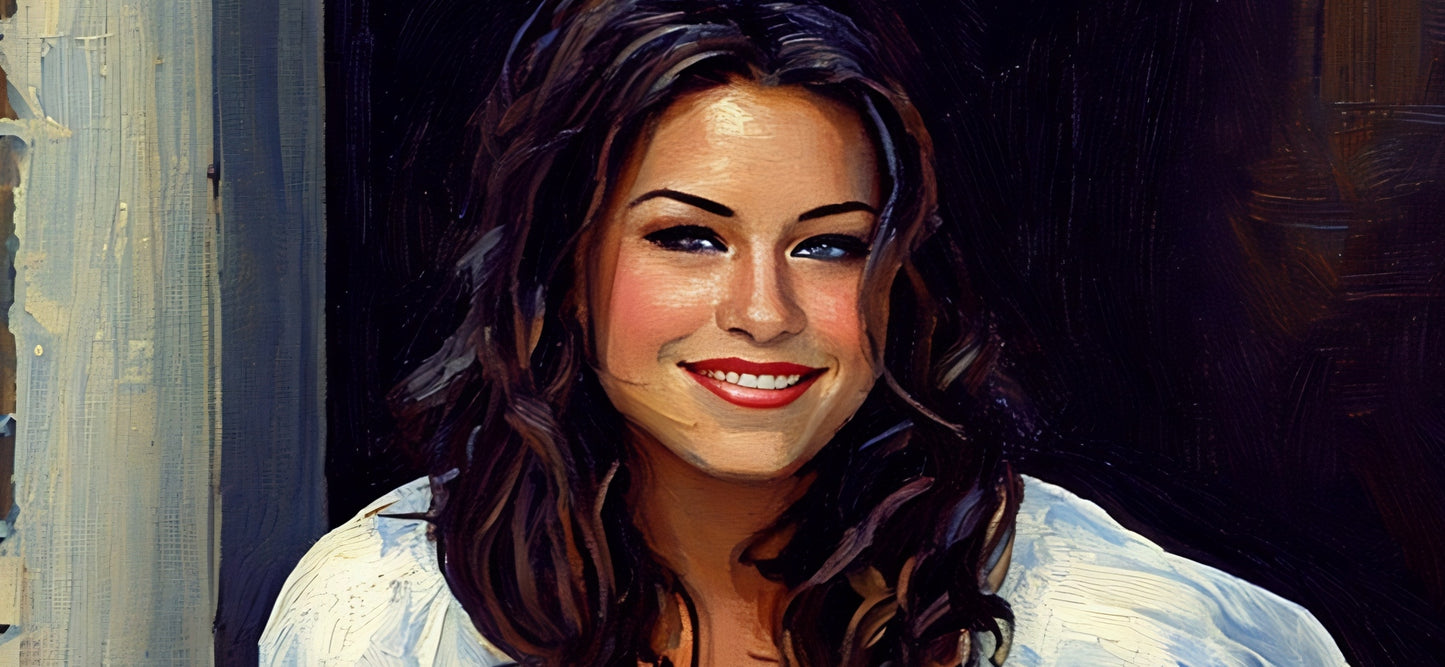


La Bella Antonia Prima Monica e Poi Dimonia (1972) 720P Italian Eng. Sub
La Bella Antonia Prima Monica e Poi Dimonia (1972) 720P Italian Eng. Sub
🌱 Wide Selection
💪 Expert Advice
🚚 Fast Delivery
Couldn't load pickup availability
A good-looking "painter" named Claudio Fornari (Piero Focaccia) arrives in a small Italian village commissioned to paint the beautiful Antonia (Edwige Fenech). Antonia is set to wed a young man named Folco (a dope of a man with feminine mannerisms), but their marriage is blocked by their feuding fathers because Antonia’s father believes his daughter is too pretty to require a dowry. The plot unfolds as Claudio charms and seduces nearly every woman in the village, including Folco’s mother. Folco’s father eventually relents and allows them to marry. In classic Italian comedy fashion, the "innocent" Antonia then starts having eyes for the painter Claudio.
Edwige Fenech plays Antonia (the lead role and Claudio’s final conquest). Edwige is the undisputed queen of Italian comedy. She became an icon of European exploitation cinema in the 70s (I give more details on her in other descriptions). 1972 was a massive year for her, starring in three separate medieval comedies which made her a major box-office draw.
Malisa Longo plays Caterina (the innkeeper's wife, Claudio’s first conquest). Malisa was an icon of Italian B-movies. She was the European She-Wolf (Helga, She Wolf of Stilberg & Fräulein Devil), essentially Europe’s B-movie answer to Dyanne Thorne (the infamous Ilsa). She also regularly worked with director Tinto Brass (including Salon Kitty and Miranda). She is broadly referred to as a "Queen of Euro-Cult."
Lucretia Love plays Ippolita (Folco’s mother, a middle conquest). Lucretia was US-born but found her true calling in Italian genre cinema. One of the most interesting footnotes in her career is the 1969 film Zenabel. She was given the title role in this action-comedy adventure, but the film was a massive box-office bomb, which then relegated her to supporting roles for the rest of her prominent career. She played mysterious, alluring, or doomed upper-class women in Giallo and Horror movies (The Killer Reserved Nine Seats (1974), A Black Ribbon for Deborah (1974), and The Devil Has Seven Faces (1971)). She shared the screen with Pam Grier in the gladiator film The Arena (1974) and starred in a number of bawdy, farcical Italian comedies.
Dada Gallotti (Antonia’s stepmother) was instantly recognizable to anyone who has spent time exploring 1960s and 1970s Euro-cult movies. She appeared in all sorts of genres, from westerns to thrillers.
Piero Focaccia (Claudio the Painter) was a highly successful Italian pop singer. Focaccia's life changed completely in 1963 when he released the song "Stessa spiaggia, stesso mare" (Same beach, same sea). The song was a massive hit, reaching the top three on the Italian hit parade. After a brief lull in his music career, he found major success again in 1970 with the track "Permette signora," which climbed to number nine on the Italian charts. Because he was a household name with natural charm, Italian film producers occasionally brought him in to capitalize on his pop-star recognition. His acting filmography is extremely brief, consisting primarily of two lighthearted comedies (the other being La schiava io ce l'ho e tu no (1973)).
The film was directed by Mariano Laurenti, a workhorse of Italian high-grossing, low-brow comedies. It was designed to be shot quickly and cheaply to ride the coattails of Pier Paolo Pasolini's critically acclaimed The Decameron (1971). Laurenti shot the exterior scenes in Gubbio, a beautifully preserved medieval hill town in the Umbria region of central Italy. The interior scenes were filmed on soundstages at the Elios Studios in Rome.
Everybody’s voice was dubbed, as the movie was shot without sync sound during production. Edwige Fenech’s voice was dubbed by Rita Savagnone. Critics absolutely despised the movie. A reviewer for the Corriere della Sera famously called Laurenti's direction "at the extreme end of technical illiteracy" and said it was "stuffed to the point of boredom with the heaviest profanity." Despite this, it was a massive commercial success, grossing over 520 million lire domestically.
Alternate titles: Naughty Nun, Beautiful Antonia, First a Nun Then a Demon, La bella Antonia, primero monja despues demonio, La Bella Antonia Prima Monica e Poi Dimonia, and Wehe, wenn die Lust uns packt.