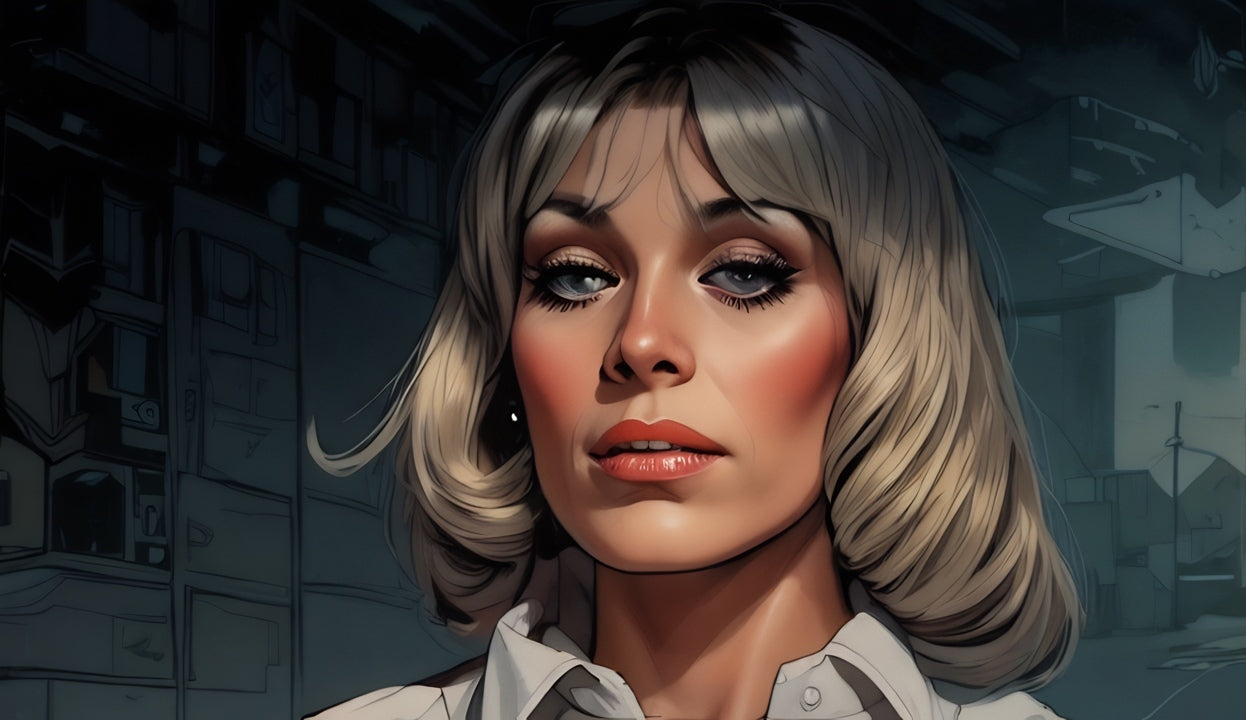


Ilsa, She Wolf of the SS (1975) 720P Dyanne Thorne
Ilsa, She Wolf of the SS (1975) 720P Dyanne Thorne
🌱 Wide Selection
💪 Expert Advice
🚚 Fast Delivery
Couldn't load pickup availability
Ilsa, She Wolf of the SS is a quintessential 1975 film set in a fictional Nazi torture camp, Camp 9, during World War II. The story follows the sadistic commandant, Ilsa. The brutal routine of the camp is disrupted when an American prisoner of German descent named Wolfe arrives. Wolfe uses his physical endurance and charm to make Ilsa fall in love with him, eventually organizing a violent prisoner uprising to destroy the camp and end her reign of terror.
The film was directed by Don Edmonds, a former actor who transitioned behind the camera and brought a stark, unflinching visual style with him. The production was heavily influenced by the legendary filmmaker David F. Friedman, who helped guide the project, though the official producer credit went to "Herman F. Hover" (a pseudonym). Friedman, known as a pioneer of the "roughie" and gore genres, provided the necessary marketing savvy to turn a low-budget shocker into a highly lucrative drive-in and grindhouse staple. The supporting cast consisted largely of young actresses like Maria Marx (Anna), Nicolle Riddell (Katarina), and Jo Williams (Gretchen), the prisoners.
Dyanne Thorne achieved lasting cult stardom through her iconic portrayal of Ilsa. Despite playing one of cinema's most ruthless and imposing villains, Thorne had a background in stage acting, comedy, and ordained ministry, and was universally described by her cast and crew as a warm, gentle, and consummate professional. Her commanding screen presence anchored the film's chaotic energy, leading her to reprise the character—or variations of her—in several sequels, including Ilsa, Harem Keeper of the Oil Sheiks and Ilsa, the Tigress of Siberia.
One of the most famous pieces of trivia surrounding the film is that it was shot on the repurposed, leftover sets of the lighthearted television sitcom Hogan's Heroes. The film was initially banned in several countries (UK and Australia). Despite the heavy censorship and critical panning, it became a massive financial success and single-handedly spawned the controversial "Nazisploitation" subgenre of the late 1970s, cementing its strange but undeniable place in cult cinema history.